The story of human civilization can be told through its art. From the earliest cave paintings to the grand canvases of the Renaissance, art has always served as both record and revelation. To encounter timeless art masterpieces is to stand before history distilled into form, color, and imagination. These works transcend centuries, speaking with a voice that continues to inspire and provoke.
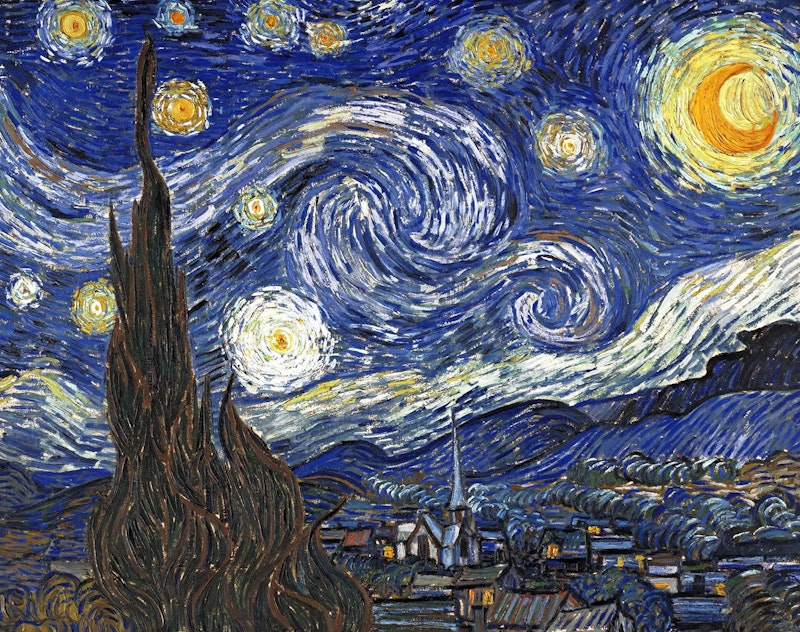
The Essence of Mastery
What makes a work of art endure beyond its era? It is not solely the brilliance of technique, nor is it only the prestige of the artist. Instead, endurance lies in resonance. Artistic classic works hold the ability to move viewers across generations, communicating emotions and truths that remain relevant despite shifting cultural contexts. From Michelangelo’s “David” to Vermeer’s “Girl with a Pearl Earring,” such pieces embody more than craftsmanship. They embody the human spirit itself.
Renaissance Brilliance
The Renaissance marked a flourishing of ideas where art, science, and philosophy intertwined. Works like Leonardo da Vinci’s “Mona Lisa” or Raphael’s “School of Athens” became creative historic treasures, encapsulating ideals of harmony, balance, and intellectual pursuit. These paintings and sculptures did not merely decorate palaces or cathedrals. They acted as declarations of a new worldview, celebrating human potential and rediscovery of classical wisdom.
The Renaissance contributed profoundly to visual cultural heritage, leaving behind an artistic canon that continues to shape education, aesthetics, and design even today. Its masterpieces remain benchmarks for innovation, demonstrating how creativity can both honor tradition and redefine it.
Baroque Splendor
Following the Renaissance, the Baroque era brought an explosion of drama, intensity, and grandeur. Caravaggio’s mastery of chiaroscuro and Bernini’s dynamic sculptures exemplified a period where art sought to engage the senses fully. These works are more than decorative achievements. They are timeless art masterpieces that reveal the power of narrative and emotion, blending realism with theatricality.
Baroque art reflected societies in transformation, marked by religious conflict, scientific discovery, and political ambition. Its enduring presence in the halls of Europe showcases how art can both reflect turbulence and offer transcendent beauty.
The Romantic Spirit
Romanticism arose in the late eighteenth century as a defiant answer to rationalism. Painters like Caspar David Friedrich and Francisco Goya illuminated the sublime, the terrifying, and the deeply personal. Their works are artistic classic works, not because they adhered to rules, but because they broke them. They embraced emotion as the highest truth.
This movement expanded the idea of visual cultural heritage by asserting that nature, individuality, and even suffering could be celebrated on canvas. Romantic art continues to resonate with audiences seeking authenticity and intensity in human expression.
Modernist Innovation
The twentieth century fractured tradition and rebuilt it anew. Pablo Picasso’s Cubism, Claude Monet’s Impressionism, and Wassily Kandinsky’s abstractions dismantled conventional representation and opened doors to radical exploration. These were not mere stylistic experiments. They were creative historic treasures that altered the trajectory of visual expression.
Such works symbolize visual cultural heritage for a modern age. They reflect not only aesthetic innovation but also the profound upheavals of their time, from industrialization to world wars. They are proof that timelessness does not require conformity but can emerge from audacity.
Non-Western Masterpieces
The canon of timeless art masterpieces is not limited to Europe. Across the globe, civilizations crafted works of equal resonance. Japanese ukiyo-e prints, Indian Mughal miniatures, African masks, and Mayan stelae are all artistic classic works that carry deep cultural meaning. Each is embedded within specific traditions yet speaks universally of human creativity.
To acknowledge these is to broaden the scope of visual cultural heritage, ensuring that recognition extends beyond a narrow lens. These works demonstrate that every culture contributes enduring beauty and insight to the shared story of humanity.
Preservation of Heritage
Safeguarding these works is not a passive endeavor. Museums, conservationists, and cultural institutions labor to protect creative historic treasures from decay, war, and theft. Their efforts ensure that future generations can experience the same awe and reflection inspired by masterpieces of the past. Preservation is both technical and philosophical, rooted in the belief that art is a collective inheritance.
Without such stewardship, the world would risk losing not only objects but the narratives and identities they represent. Protecting masterpieces is, in essence, protecting memory.
The Timeless Dialogue
Every era rediscovers these works anew. A contemporary viewer may find relevance in Botticelli’s “Birth of Venus” for its celebration of beauty, or in Picasso’s “Guernica” for its condemnation of violence. Each encounter is fresh, as though the work speaks directly to the present moment.
This is the enduring quality of timeless art masterpieces. They transcend their origin, becoming bridges between past and present. They remind us that artistic classic works are not relics but living dialogues, capable of shaping thought and igniting imagination centuries after their creation.
To discover these works is to enter into an unbroken conversation across time. They are not static artifacts but creative historic treasures that testify to the enduring capacity of human beings to imagine, to feel, and to create. They form the core of our visual cultural heritage, shaping how societies remember their past and envision their future.
In every stroke, sculpture, or carved detail lies a timeless truth. Masterpieces of visual arts remind us that beauty and meaning are not bound by centuries. They belong to all of us, across ages, as enduring symbols of humanity’s highest aspirations.