Abstract art represents one of the boldest leaps in human creativity. It broke away from the demand for likeness and realism, offering instead a new visual language built from shapes, colors, and forms. To explore its story is to uncover how imagination reshaped cultural identity and artistic philosophy. Across centuries, historical abstract styles emerged that not only altered aesthetics but also redefined how society perceives art itself.
Early Seeds of Abstraction
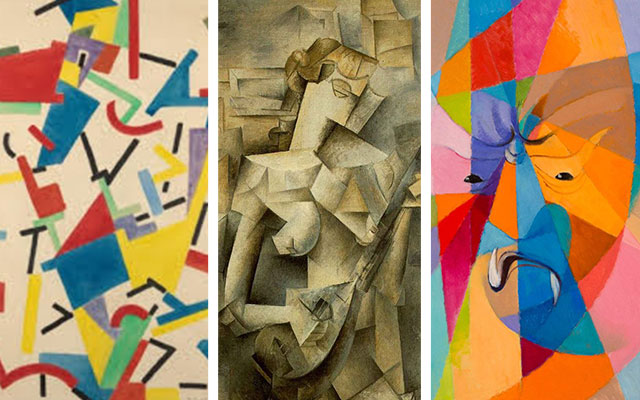
Long before the term “abstract” was formally used, artists experimented with reducing reality to its essential components. Ancient civilizations decorated pottery and textiles with geometric motifs, a precursor to more deliberate abstraction. These early designs hinted at the potential of form without representation.
It was not until the late 19th and early 20th centuries, however, that movements in abstract art truly took shape. The world was shifting rapidly, with industrialization, science, and philosophy challenging conventional perspectives. Artists began seeking new modes of expression to match the evolving spirit of their age.
The Pioneer Era
Wassily Kandinsky is often credited with creating the first fully abstract painting. His compositions freed color and shape from their descriptive duties, treating them as independent entities with emotional resonance. Around the same time, artists like Piet Mondrian embraced reduction, creating balanced compositions of lines and primary colors. These were not random choices but deliberate explorations of universal harmony.
The influence of these historical abstract styles was profound. They suggested that painting could be about rhythm, energy, and spirituality rather than literal depiction. This new mindset spread rapidly, inspiring other innovators across Europe and beyond.
Surrealism and Its Offshoots
While not purely abstract, Surrealism blurred the boundary between imagination and reality. It embraced dreamscapes, subconscious imagery, and distorted forms. Within this fertile ground, abstraction took on psychological dimensions. Artists like Joan Miró created visual languages that hovered between representation and abstraction, planting seeds for future experimental directions.
Here, the evolution of abstraction intertwined with human psychology. No longer was abstraction just about form and color; it became a vessel for exploring the unseen, the subconscious, and the intangible mysteries of existence.
Abstract Expressionism
The mid-20th century witnessed an eruption of energy on canvas. Abstract Expressionism, born in New York, marked a turning point in global art history. Figures like Jackson Pollock, Mark Rothko, and Willem de Kooning forged radically different yet equally revolutionary approaches.
Pollock’s drip paintings embodied movement itself, transforming the canvas into an arena of action. Rothko’s vast color fields, in contrast, evoked quiet contemplation and emotional transcendence. Together, these works epitomized the radical diversity within movements in abstract art.
This period represented a powerful phase in the abstract past to present narrative. For the first time, America stood at the epicenter of artistic innovation, shifting the cultural balance from Europe.
Minimalism and Beyond
As the 1960s unfolded, abstraction underwent another transformation. Minimalism stripped down compositions to the bare essentials. Artists like Donald Judd and Agnes Martin pursued clarity, precision, and restraint. Their work rejected excess, instead inviting viewers to experience purity of form and space.
This stage of the evolution of abstraction illustrated how abstraction could adapt and reinvent itself. Far from being a single style, it became a broad spectrum encompassing emotion, philosophy, and mathematics alike.
Contemporary Abstraction
Today, abstraction thrives in countless variations. Digital media has expanded possibilities, enabling immersive installations and interactive experiences. Contemporary artists draw inspiration from past innovators while fusing abstraction with issues such as identity, environment, and technology.
The journey from historical abstract styles to today underscores the enduring flexibility of abstraction. It has shifted from canvas to virtual reality, from personal expression to global commentary. The story of abstraction is not one of repetition but of reinvention.
Why Abstraction Matters
Abstraction matters because it demands participation. Unlike representational art, which offers immediate recognition, abstraction challenges viewers to interpret and engage. It asks questions rather than delivering answers. What does this shape mean? How does this color make you feel? Why does emptiness speak as loudly as presence?
Through movements in abstract art, societies have learned to appreciate ambiguity and embrace diversity of thought. By engaging with abstraction, people cultivate empathy and imagination, skills essential not just for art but for navigating the complexities of life.
Abstract Past to Present
Tracing the abstract past to present reveals a narrative of courage. Each generation of artists took risks, breaking away from tradition to forge new paths. From Kandinsky’s first experiments to contemporary installations, abstraction has been a story of pushing boundaries and rethinking possibilities.
Abstraction’s endurance lies in its adaptability. It morphs with culture, technology, and philosophy, yet always retains its essence: to distill, to question, to evoke. This ability to remain relevant ensures that abstraction will continue to inspire future artists and audiences alike.
Conclusion
Abstract art movements are not mere stylistic shifts. They are milestones in the history of human thought. From the historical abstract styles that planted the seeds of modern creativity, through the diverse movements in abstract art that shaped the 20th century, to the continuing evolution of abstraction in contemporary practice, each stage reveals the boundless nature of imagination.
The story of abstraction is not finished. It continues to unfold, bridging the abstract past to present and pointing toward new horizons. In every bold stroke, every field of color, and every minimalist line, abstraction reminds us that art is not just about what we see but a