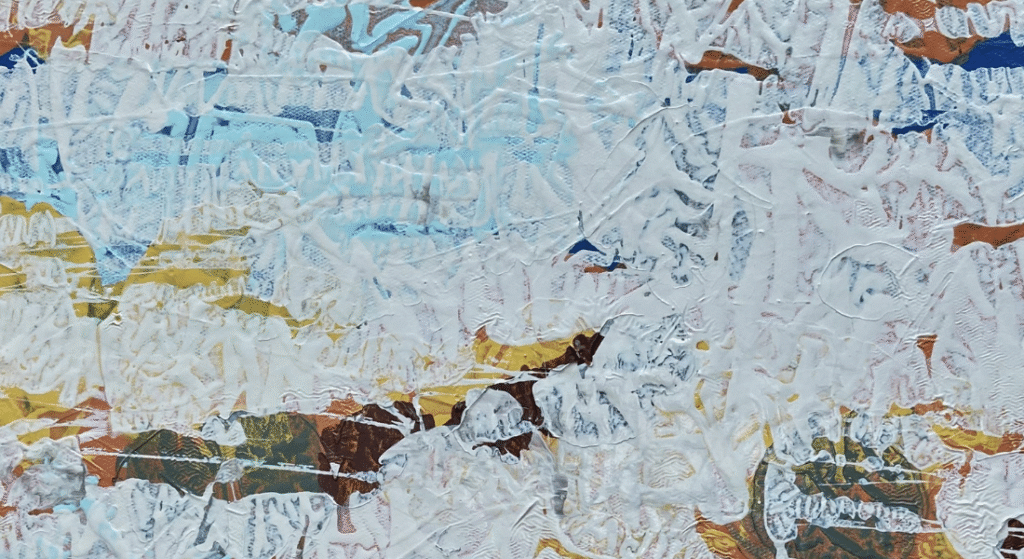
Abstract art has long fascinated viewers with its refusal to be confined by literal representation. Rather than depicting landscapes or portraits with exacting detail, it pushes us into a realm of colors, shapes, and textures that whisper rather than shout their messages. To truly appreciate it, one must learn to decode abstract meanings, looking beyond what is obvious and daring to discover what lies beneath.

The Nature of Abstraction
At its core, abstraction strips away the expected. It reduces, transforms, and distills visual experience into something more universal. A canvas filled with bold lines or fragmented geometry may seem cryptic at first glance. Yet within those forms often resides an emotional charge, a symbolic story, or a philosophical reflection. Artists choose abstraction not to obscure reality but to reveal a truth that cannot always be expressed through realism.
When engaging with abstraction, it helps to accept uncertainty. The lack of a clear narrative invites the viewer to step into an active role, shaping meaning through personal perception. This interplay between creator and observer makes abstract art uniquely dynamic.
Searching for the Hidden
Abstraction thrives on suggestion. Within an expanse of paint or a swirl of texture, there may be symbols, cultural references, or deeply personal motifs. Some artists bury clues in their works, weaving patterns that point toward hidden ideas in abstract form. Others embrace ambiguity deliberately, leaving room for viewers to project their own feelings and interpretations.
This duality makes the genre endlessly rewarding. A single artwork can conjure multiple responses depending on who encounters it and when. One person might see chaos, another harmony. What matters is not uniformity of interpretation, but the richness of the exchange between eye, mind, and heart.
The Mystery and Its Appeal
The allure of abstraction often resides in the unknown. The mystery of abstract art is what keeps audiences returning to the same works again and again. Unlike representational art, which can be comprehended quickly, abstraction unfolds slowly. The longer one contemplates, the more possibilities arise.
Mystery invites curiosity. It encourages a willingness to ask questions rather than demand answers. Why did the artist choose that palette? What emotions are evoked by the brushstrokes? What unspoken message lingers beneath the surface? By engaging with these questions, the viewer steps into a dialogue that may be just as creative as the act of painting itself.
Techniques for Interpretation
Interpreting abstraction does not require formal training. It requires patience, openness, and attentiveness. When you stand before an abstract canvas, pause and observe without rushing to judgment. Let your eyes wander across the surface, noticing how your gaze lingers on certain shapes or contrasts.
To interpret abstract visuals, consider these approaches:
- Color as emotion: Warm tones might suggest passion, while cooler hues often evoke calm or melancholy.
- Shape as symbolism: Circles can imply unity or eternity, while sharp angles may indicate conflict or intensity.
- Texture as experience: Thick layers of paint can convey weight and gravity, while light washes might feel ethereal.
- Movement as energy: Swirling lines may suggest turbulence, while orderly arrangements create balance.
None of these interpretations are fixed. They shift depending on the viewer’s experiences, cultural background, and even mood on a given day. That flexibility is what makes abstraction endlessly engaging.
Everyday Encounters with Abstraction
Though often associated with galleries, abstraction exists in daily life. A reflection in a rain puddle, cracks on an old wall, or the random arrangement of leaves on a sidewalk all echo principles of abstract design. By training yourself to notice these patterns, you cultivate an ability to decode abstract meanings not just in art but in the world around you.
Such a perspective enriches ordinary experiences. It transforms routine moments into sources of creativity and awareness. Abstraction, then, is not limited to painted surfaces but extends to the way one interprets the rhythms and structures of life itself.
The Artist’s Perspective
For many creators, abstraction becomes a language of its own. It allows them to communicate feelings or concepts that cannot be fully conveyed with words. The decision to embrace abstraction is often deeply intentional. It might be a rebellion against convention, a spiritual exploration, or an effort to depict the unseen forces of existence.
Understanding this context can deepen appreciation. By learning about an artist’s influences, time period, or philosophy, viewers gain insights into the hidden ideas in abstract works that might otherwise remain obscure. Still, the final interpretation always remains open, never fully dictated by history or intent.
The Role of the Viewer
Ultimately, abstract art thrives because of the viewer’s participation. Each observer becomes a co-creator, filling the gaps left by the artist. The act of interpretation is as much about self-discovery as it is about understanding the artwork.
When you interpret abstract visuals, you reveal your own associations, memories, and emotions. The process becomes a mirror, reflecting not just the artwork but also your inner world. This interplay explains why abstraction feels so personal, why two people can stand before the same canvas and walk away with entirely different impressions.
Conclusion: Embracing the Enigma
To explore abstraction is to embrace ambiguity and possibility. It is to let curiosity replace certainty, and to find beauty in the elusive. Through openness and attentiveness, one can unravel the mystery of abstract art and discover treasures hidden in plain sight.
Whether you choose to decode abstract meanings, seek out the hidden ideas in abstract, or simply allow yourself to interpret abstract visuals with fresh eyes, the journey will always offer more than you expect. Abstraction is not a puzzle with one solution but a landscape of infinite paths. By walking those paths, you not only understand art more deeply, you also learn something profound about yourself.