

Art is a powerful form of expression, but it also carries responsibility. Every brushstroke, every sketch, every splash of color can be made more meaningful when supported by choices that respect the planet. Today, many creators are looking toward eco-friendly art supplies that balance creativity with care for the environment. These alternatives do not compromise on quality; instead, they provide fresh opportunities to reimagine how art connects to the world around us.
Why Sustainability Matters in the Studio
Traditional art materials often rely on plastics, synthetic chemicals, and nonrenewable resources. While they may perform well, they leave behind waste and pollution that burden the earth. By turning to sustainable art tools, artists reduce their ecological footprint without sacrificing innovation. A conscious approach in the studio reflects an awareness that every creative act has both aesthetic and environmental resonance.
Paper Choices with Purpose
Paper is central to nearly every artistic discipline. Fortunately, recycled and responsibly sourced papers are now widely available. Options certified by the Forest Stewardship Council ensure that fibers are harvested responsibly. Handmade papers crafted from cotton rags or agricultural byproducts provide texture and individuality. These belong on any green artist material list, proving that beauty and sustainability can coexist on the same surface.
Eco-Friendly Drawing and Coloring Tools
Pencils, markers, and paints can also be selected with intention. Graphite pencils made with recycled wood or biodegradable casings offer an alternative to mass-produced varieties. Soy-based crayons and water-based markers deliver vibrant color without toxic residues. Natural earth pigments, derived from minerals and clays, bring history and authenticity into contemporary work. These innovations are shining examples of environmental art products designed for a greener creative process.
Brushes That Respect Nature
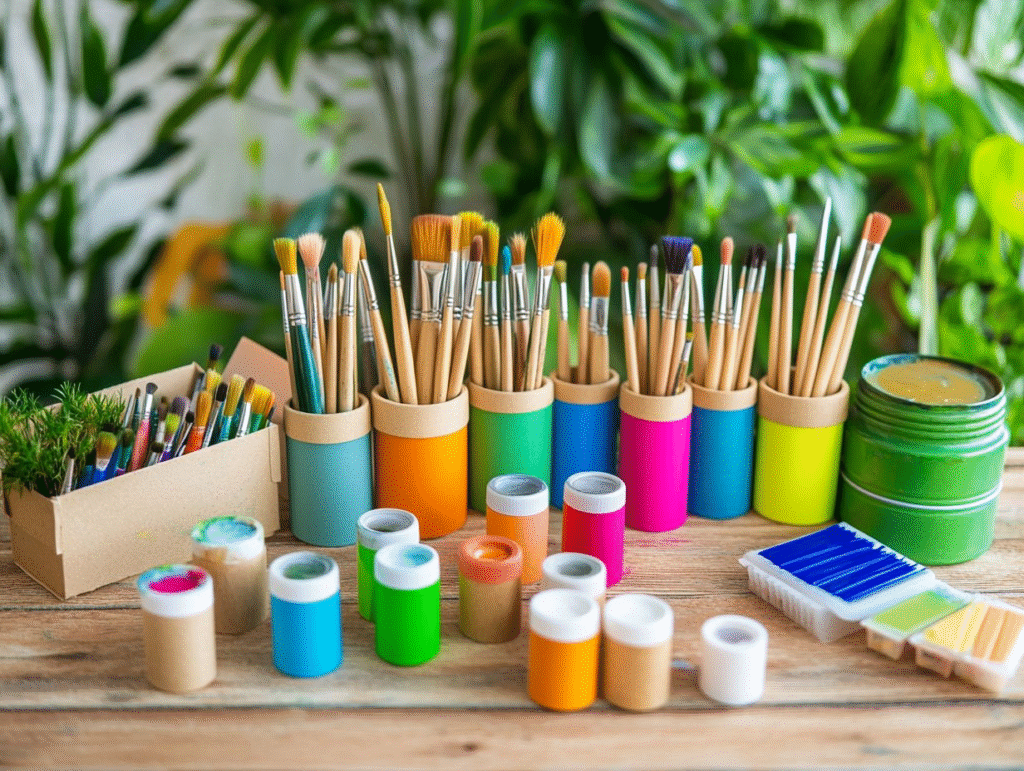
Brushes are essential for painters, yet many traditional models use animal hair or plastic handles. Today, manufacturers are introducing bamboo-handled brushes paired with synthetic bristles that rival natural hair in flexibility and strength. Recycled aluminum ferrules complete the design, ensuring durability without waste. These brushes stand proudly as sustainable art tools that allow artists to paint with both precision and conscience.
Non-Toxic Paint Alternatives
Paint is often the most chemically complex medium in the studio. Oils, acrylics, and watercolors may contain solvents or additives harmful to the environment. Fortunately, water-based acrylics formulated with non-toxic binders and natural pigments are becoming widely accessible. Plant-based oil mediums provide a safer alternative to turpentine. Even traditional watercolor palettes are being redesigned with refillable pans to minimize plastic. These choices deserve a prominent place on any green artist material list, reflecting a shift toward safer and cleaner practices.
Upcycled and Reusable Materials
Creativity thrives on resourcefulness. Artists can embrace upcycling by incorporating discarded textiles, packaging, or glass into mixed-media works. Refillable markers and mechanical pencils reduce waste over time. Palettes made from reclaimed wood or recycled glass replace single-use plastics. These innovations are not just practical but also inspiring, reinforcing the message that eco-friendly art supplies encourage new ways of thinking about form and function.
Storage and Studio Practices
Sustainability extends beyond individual tools. How materials are stored and managed plays a role too. Reusable glass jars can replace disposable containers for water or solvents. Cloth rags, washed and reused, minimize reliance on paper towels. Even lighting can be adjusted with energy-efficient bulbs to reduce the studio’s overall environmental impact. Small shifts like these complement a broader commitment to environmental art products that support eco-conscious creativity.
Supporting Ethical Brands
Behind every sustainable product lies a brand making deliberate choices. Many companies now prioritize transparency in sourcing, ethical labor practices, and environmentally sound packaging. By investing in these producers, artists send a powerful message that demand exists for high-quality, planet-friendly options. This collective support strengthens the movement toward sustainable art tools, ensuring that future generations of creators inherit a greener landscape for artistic exploration.
The Creative Benefits of Sustainability
Working with environmentally responsible materials brings more than peace of mind. It often sparks new inspiration. Limited palettes of natural pigments encourage inventive blending. Textured recycled papers challenge traditional approaches to line and shading. Even constraints imposed by choosing eco-friendly art supplies can lead to breakthroughs, as artists reimagine how to adapt tools for fresh effects. Sustainability, in this way, becomes not a restriction but a catalyst for originality.
Building a Conscious Toolkit
No artist needs to overhaul their studio in a single day. Instead, building a collection of sustainable options is best approached gradually. Start by replacing one or two items with greener alternatives. Add recycled sketchbooks, then shift to bamboo brushes, then explore plant-based paints. Over time, the balance shifts until the studio reflects both artistic ambition and environmental care. A curated green artist material list becomes a reflection of values as much as skills.
A Future of Responsible Creation
Art has always been a mirror of society, reflecting its priorities and values. By embracing sustainable art tools and championing environmental art products, artists position themselves at the forefront of a cultural shift. Creativity need not come at the planet’s expense; instead, it can model harmony between imagination and stewardship. Each sketch, painting, or sculpture made with intention becomes part of a greater movement, one where art flourishes alongside a thriving earth.


